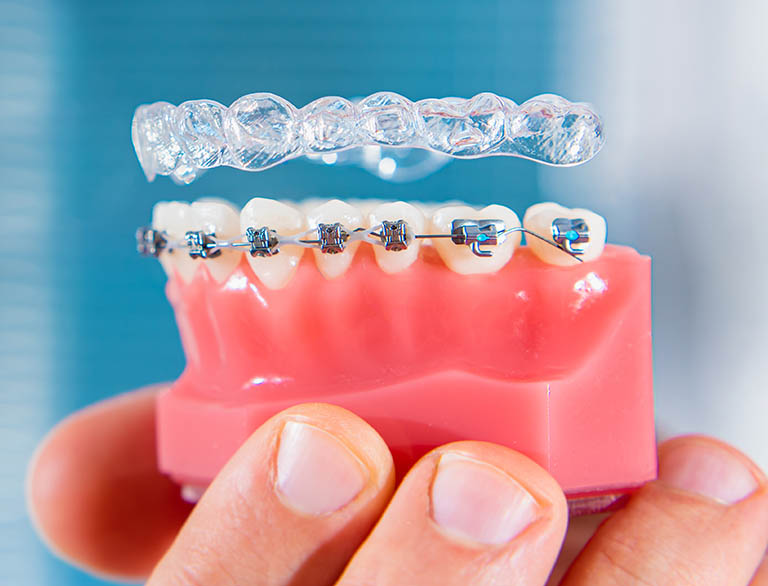
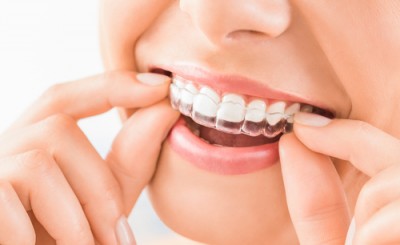
Invisalign in Tunisia refers to a specific branded system of clear orthodontic aligners, used to move teeth according to an individually prescribed plan. The main decision for a Canadian patient is whether a qualified clinician can diagnose the bite, deliver genuine Invisalign treatment if requested, supervise changes over many months and arrange timely care in Canada. The first scan and the first set of trays are only the beginning.
In this article, you will find an explanation of aligners, candidacy, treatment stages, limitations, risks, costs and the longer course of monitoring. It addresses English-speaking and French-speaking Canadians considering care in Tunisia and the practical difference between a remote initial assessment and reliable ongoing orthodontic care.
What Invisalign is and how it works
A branded series of removable aligners
Invisalign is a brand of clear aligner treatment. A clinician plans staged tooth movements and provides a sequence of custom trays that apply controlled forces. The trays are removed for meals and cleaning and worn according to the treating clinician's instructions. An initial digital simulation illustrates a proposed sequence, but it is a planning tool, not a promise that teeth will move exactly as shown. The clinician checks whether the teeth, gums and supporting bone can tolerate the intended movement.
Teeth, roots, bite and gum health
The visible straightness of the front teeth is only one part of orthodontics. A proper assessment also considers roots, existing fillings and crowns, jaw relationship, bite contacts, wear, gum disease and any missing teeth. Appropriate imaging and clinical examination may reveal issues not visible in a selfie or scan. Teeth move through supporting bone, and uncontrolled periodontal disease or untreated decay should be addressed before aligners. Some movements are less predictable and may require additional techniques or a different orthodontic approach.
Why continuity matters across borders
Aligners are usually worn through a sequence lasting months, with periodic review and possible changes to the plan. Attachments may need repair, interproximal reduction may be scheduled at specific stages, and extra trays or refinements may be required. A patient living in Canada needs a named clinician responsible for progress reviews and prompt attention when a tray stops fitting. A single trip to Tunisia cannot by itself complete the clinical supervision of an active orthodontic case.
Invisalign versus other orthodontic options
Other clear aligners and authentic product verification
Clear aligners can come from several manufacturers. An offer described only as clear aligners does not establish that it uses Invisalign. If the brand matters to you, request confirmation of the actual product, the prescribing clinician and how replacement trays and refinements will be obtained. A clinician should select the system for the patient's clinical needs and explain how the chosen system handles the required movements. Avoid accepting the brand name as proof of provider expertise.
Attachments, enamel reduction and elastics
Small tooth-coloured attachments can help trays grip and move teeth. Interproximal reduction is controlled removal of a small amount of enamel between selected teeth when clinically justified; it is irreversible and should be explained tooth by tooth. Elastics or other adjuncts may be prescribed for certain bite corrections. These steps require in-person care and a schedule that works after the patient returns to Canada. If a proposal assumes no local clinician will ever need to see you, ask how those procedures and unexpected repairs will occur.
Fixed braces, restorative care and observation
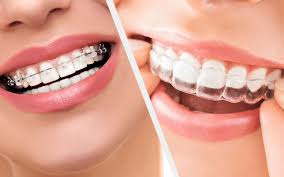
Fixed braces may offer more suitable control in some complex movements or where a person cannot wear removable trays consistently. A patient with gum disease may need periodontal care first; damaged teeth or missing teeth can change the sequence with restorative treatment. Some minor cosmetic concerns can be left alone, while veneers change tooth appearance without moving roots or correcting a bite. The best option depends on examination and the ability to attend reviews, not on the advertised invisibility of a tray.
Real indications for Invisalign
- Crowding or spacing that a clinician judges suitable for aligner treatment.
- Selected bite problems when the required movements and adjuncts can be managed reliably.
- Relapse after earlier orthodontics, once current dental and periodontal health are checked.
- A preference for removable, less visible appliances with capacity to follow the prescribed wear and review schedule.
Suitability varies with the movement required, gum support, oral hygiene and access to ongoing care. The treating clinician may recommend braces, periodontal treatment, another specialist assessment or no orthodontic treatment. A Canadian patient should evaluate whether travel, local appointments and the responsibility for refinements make the proposed course workable before paying for a full series of trays.
Indications and contraindications for Invisalign
| Situation to assess | How it affects the decision |
|---|---|
| Mild or moderate alignment issue | May suit aligners, subject to bite, root and gum assessment. |
| Complex tooth movement or skeletal bite issue | May require another appliance, adjuncts or a specialist plan. |
| Active decay or periodontal disease | Treat disease and establish stability before elective tooth movement. |
| Limited ability to wear trays consistently | Reduced wear can prevent planned tracking and lengthen treatment. |
| Attachments or scheduled enamel reduction | Confirm access to the clinician who will perform these steps. |
| Long-term residence in Canada | Establish who provides monitoring, repairs, refinements and retention. |
| Pregnancy or changing medical condition | Review imaging, medications and timing individually rather than assuming a universal ban. |
How the procedure is performed, step by step
Before the procedure
The clinician examines the teeth, bite and gums, reviews medical and dental history and obtains records such as photographs, a digital scan and imaging when indicated. They discuss the desired outcome, limitations, alternatives and likely need for attachments or enamel reduction. Ask for a written plan explaining who prescribes the aligners, the exact product, how progress will be checked in Canada and what happens if the simulation differs from actual tooth movement. The plan may change after an in-person examination.
During the procedure
There is usually no operation or general anesthesia for routine aligner delivery. The clinician may place attachments, perform prescribed interproximal reduction at an appropriate visit and check the fit of initial trays. The patient learns to insert, remove, clean and store them and receives an individualized wear and tray-change schedule. Later visits may involve further attachments, adjustments or new records. Do not begin an unsupervised sequence of trays based only on a remote simulation.
After the procedure
The patient follows the prescribed wear schedule and attends planned reviews so the clinician can confirm that teeth are tracking. If a tray does not seat, an attachment comes off, the gums hurt or the bite changes unexpectedly, contact the responsible provider before advancing to the next stage. After active movement, retainers and long-term review are usually necessary to reduce relapse. The duration and form of retention must be part of the original discussion and quote.
Recovery and time away from normal activities
| Approximate period | Expected changes and practical decisions |
|---|---|
| First trays and each change | Temporary pressure or speech adjustment may occur; check proper seating. |
| Throughout active treatment | Wear and review schedule continues; confirm tracking before progressing. |
| If tracking changes | A clinician may adjust the plan, use refinements or reconsider the method. |
| After active movement | Retention and ongoing checks help limit relapse. |
These phases describe a typical treatment sequence, not an individual completion date or permission to proceed without clinical monitoring.
Discomfort, cleaning and daily routine
Pressure after a new tray can be expected, but severe pain, a sharp edge, an ulcer or persistent difficulty seating an aligner deserves review. Remove trays as instructed for meals, clean both teeth and appliances, and protect against lost or damaged trays while travelling. Speech may briefly feel different. Most ordinary work can continue, though jobs with unpredictable meals or limited access to cleaning can make prescribed wear harder to maintain.

The flight and changes in travel plans
Flying with aligners does not ordinarily resemble recovery from surgery, yet practical interruptions matter. Carry trays and any prescribed supplies in hand luggage, keep track of the current stage and know whom to call if a tray is lost during a connection. Do not advance the schedule to accommodate a flight. A patient departing Tunisia soon after attachments or enamel reduction should know how to report discomfort or fitting problems from Canada.
Reviews after returning to Canada
Before the first tray is delivered, establish whether a Canadian dentist or orthodontist has agreed to monitor the case and under what arrangement. Some clinicians may decline to supervise a plan started elsewhere or may require a new assessment and fee. Clarify whether the Tunisian prescriber remains responsible for clinical decisions, how records are shared, who repairs attachments, how additional trays are ordered and who supplies retainers. Time zones and video calls cannot replace needed chairside treatment.
Expected results and durability
Straightness and bite function
Teeth may look straighter as treatment progresses, but the final goal includes a bite that the clinician considers functional and stable for that particular patient. Some rotations, root movements or complex bite changes may be harder to achieve with aligners alone. The original plan can require refinement or a switch in method. Progress photographs show visible crowns, not necessarily root positions, gum health or contacts between back teeth.
Refinements and retention
Additional scans and trays may be needed if teeth do not follow the planned sequence. The quote should state whether refinements have a time limit or extra cost and who arranges them for someone living abroad. After treatment, retainers are usually needed because teeth can shift again. Ask about retainer type, replacement, follow-up and long-term costs. A before-and-after image without information about bite, monitoring or retention cannot establish the durability of a result.
No guaranteed end date
Treatment length depends on the starting bite, the biological response, prescribed wear, missed appointments and whether changes to the plan are needed. An advertised short course is not a substitute for an individual diagnosis. Travel arrangements should allow for further chairside work or a local provider if the plan changes. Do not schedule irreversible dental restorations solely on the basis of an initial digital prediction.
Risks and possible complications
- Poor tracking or prolonged treatment: Teeth may not follow the digital plan, requiring a change in trays or method.
- Gum inflammation, decay or sensitivity: Inadequate cleaning around teeth and aligners can cause problems during treatment.
- Root and gum changes: Orthodontic movement can be associated with root shortening or recession in some patients; assess individual risk.
- Bite changes and discomfort: Contacts may change unexpectedly, and painful or damaged trays require assessment.
- Relapse and interrupted care: Teeth may move after treatment, especially if retention is not maintained or reviews are missed.
Problems that need a clinician
Seek prompt dental advice for a tooth that becomes markedly mobile, severe or persistent pain, swelling, suspected infection, a tray that will not seat, a broken attachment affecting the plan or a rapidly changing bite. Do not move through more trays hoping a major fit problem will resolve itself. Establish before travel how the original prescriber and a Canadian professional will coordinate urgent decisions and who bears the cost of an unexpected intervention.
Why consider Tunisia for Invisalign?
A Canadian patient may consider a Tunisian consultation when a specific treating clinician offers a transparent orthodontic plan and the full course of care remains practical across borders. The benefits of a first appointment cannot be assessed separately from future visits. Confirm that genuine Invisalign is proposed if that is your preference and that the clinician is qualified to plan and supervise the case; do not assume availability at a particular clinic without direct confirmation.
Test the follow-up model before paying
Ask how many in-person visits the Tunisian clinician expects, what procedures are scheduled after the first visit and whether a named Canadian clinician will participate. Confirm whether the local professional has accepted the role, which records they can access and who can authorize a change in the plan. Without this arrangement, a cheaper initial quote may lead to duplicate treatment fees or an abandoned course once the patient returns home.
Confirm direct language access
Consent, detailed explanations of bite mechanics and troubleshooting require clear communication. Ask which languages the prescribing clinician and any local follow-up professional actually use for direct appointments. Some patients from Quebec or Acadian communities may prefer French; others prefer English or a bilingual exchange. A booking service's language options do not establish the language of medical consultations, and the written plan should be understandable to the patient.
Cost of Invisalign in Tunisia
| Factor | Effect on total cost |
|---|---|
| Diagnosis and records | Examinations, imaging and scans may have separate charges. |
| Product and case complexity | Verify genuine product and what treatment stages are included. |
| Attachments and enamel reduction | Ask who performs each scheduled chairside step. |
| Monitoring and refinements | Check visit frequency, extra tray rules and travel needs. |
| Retainers and replacement | End-of-treatment and lost-appliance costs may be separate. |
| Flights, accommodation and work | Repeat trips or extended stays can dominate the total. |
| Insurance and Canadian care | Verify coverage and fees for local supervision or emergency visits. |
Request a written, itemized quote naming the product, prescriber, treatment scope, records, planned in-person steps, reviews, refinements, retention, replacement trays and exclusions. Add all travel, currency conversion and possible Canadian fees. A low price for a first series has little meaning if supervision and retention are left unresolved. Ask what happens financially if the treatment plan changes or is stopped.
Comparison: Tunisia and other medical tourism destinations
| Decision point | Tunisia | Care in Canada | Another destination |
|---|---|---|---|
| Consultation and language | Confirm prescriber and direct consultation language. | Local examination and language choice vary by provider. | Verify each provider and actual consultation language. |
| Journey | International trips may be needed beyond initial delivery. | Local visits may be easier, depending on residence. | Repeat travel and transit depend on location. |
| Quoted scope | Ask about brand, reviews, refinements and retainers. | Ask the same questions in writing. | Ask the same questions in writing. |
| Continuity | Secure an agreed Canadian monitoring and repair plan. | Check local availability and follow-up terms. | Establish home-country handover before starting. |
No country is inherently the right place for every orthodontic case. Compare individual clinicians, actual treatment plans and how reliably someone can examine the patient when a tray stops tracking. The more frequent the required chairside steps, the greater the practical importance of proximity or a genuine shared-care arrangement.
Tunisian cities to consider for this procedure
Tunis and repeated access to the prescriber
If a named Invisalign prescriber practises in Tunis, ask where the clinical examination, scans, attachment placement and future reviews take place. A convenient airport transfer solves only the first visit. Clarify how repeated appointments would be arranged from Canada and who provides a replacement if a tray is lost after departure. Confirm the actual treatment site before comparing hotels or flights.
Sousse, Monastir and the full course of care
Sousse or Monastir may be relevant if a specifically identified clinician provides the proposed treatment, but the city name says nothing about orthodontic expertise or brand availability. Compare the logistics of further in-person visits and local support after return. If the prescribing clinician expects multiple later interventions, include travel between cities, accommodation and time off in the decision rather than assessing only the first appointment.
Which Canadian cities can patients travel from?
Montreal, Laval and Longueuil
Greater Montreal residents can compare the ease of reaching a departure airport with access to a Quebec orthodontic practice for monitoring. Ask whether that practice will accept a plan prescribed abroad, what records it requires and whether care will be available in French or English as preferred. Since treatment extends beyond one trip, consider the cost of repeat travel and whether the local professional can place or replace attachments and manage refinements.
Quebec City, Lévis, Trois-Rivières and Saguenay
Ground travel to an international departure point adds time to every potential return visit, not just the first. Map the entire itinerary and ask the prescriber which milestones require hands-on work. A patient in Saguenay or Trois-Rivières may benefit especially from identifying a nearby clinician before starting, because urgent repairs can occur between international trips. Ensure written records and the prescribed schedule can pass between the two teams.
Ottawa, Gatineau and Sherbrooke
Airport choice, interprovincial ground travel and language preferences may differ among these communities. The question is how readily a clinician at home can assess a non-seating tray or worsening bite. Ask whether a Canadian provider has expressly agreed to assist and how fees are divided. Remote photo reviews may help with uncomplicated progress, but they do not place attachments or perform planned enamel reduction.
Toronto, Hamilton, Kitchener–Waterloo and London
An Ontario patient may have several airport options, yet the relevant cost includes follow-up appointments over the entire orthodontic course and time off work. A local dentist or orthodontist should review the external treatment plan before being counted as part of the care pathway. If a Toronto-area departure is convenient but subsequent care requires repeated flights to Tunisia, compare that burden against a fully local proposal that includes refinements and retention.
Vancouver, Surrey, Victoria and Kelowna
Longer international travel from British Columbia magnifies the cost of an unplanned attachment repair or additional scan abroad. Victoria and Kelowna may add another domestic leg; Surrey residents should include airport access and connection time. Allow flexible bookings, but do not rely on ad hoc flights to solve routine orthodontic needs. A credible plan names a local provider and assigns responsibility for tray problems between visits.
Calgary and Edmonton
Compare the proposed number of trips with Alberta appointment availability and the cost of transit stops. Treatment that begins with a convenient holiday visit may become difficult if enamel reduction, new scans and refinements all require a return to Tunisia. Obtain the stage-by-stage appointment schedule and identify who will check gum health and bite at home. Ask whether retainer delivery and later replacement can be managed in Canada.
Winnipeg, Saskatoon and Regina
Prairie patients should calculate the entire journey, possible overnight connections and the cost of any extra visit prompted by poor tray fit. The first series of aligners should not be accepted without a clinical review strategy near home. Confirm that the local clinician is prepared to assess tooth movement, repair attachments if necessary and communicate with the original prescriber, rather than assuming any general dentist can take over an outside case.
Halifax, Charlottetown and St. John's
Atlantic Canada itineraries can involve multiple legs and seasonal schedule changes, so check the actual departure dates and repeat-trip feasibility. A lost tray during transit should have a clear response plan from the prescribing clinician. Patients in Charlottetown or St. John's may also have additional travel to reach a specialist, making early agreement with a local practice particularly useful. Include the cost of retaining access to care after the active phase.
Moncton, Dieppe, Edmundston and Fredericton
Acadian and other bilingual patients should verify direct French or English communication with the Tunisian prescriber and any Canadian follow-up clinician. For Edmundston or Fredericton, ground travel to an airport adds to the repeated-visit calculation. Ask for records, prescription details and notes that a local practitioner can use. A treatment plan that depends on the patient translating every clinical change is vulnerable to avoidable misunderstanding.
Smaller communities and the territories
An extra domestic flight or long drive can make frequent orthodontic reviews hard to access. The availability of a local dentist willing to provide a shared-care role may determine whether starting abroad is sensible. Arrange a practical path for urgent assessment, not just a telephone number in Tunisia. Check actual seasonal routes, transit documents and appointment availability before paying for aligners that may require regular hands-on adjustments.
How to choose a clinician for Invisalign
Confirm qualifications and the actual product
Request the prescriber's full identity, right to practise, relevant orthodontic training and experience with cases like yours. Confirm that the plan follows an examination of teeth, bite and periodontal health, with appropriate records. If specifically seeking Invisalign, ask how the genuine branded product is verified and who submits the prescription. A digital animation, sales label or provider listing alone does not prove that a specific case is appropriate or that the full treatment course is covered.
Require a written shared-care pathway
Ask who makes clinical decisions after you return, who conducts in-person reviews, places or repairs attachments, performs any enamel reduction, orders refinements and supplies retainers. Obtain written acceptance from the Canadian clinician where a shared arrangement is proposed. Review the facility, safety and escalation arrangements for any in-person procedures, plus the itemized quote and cancellation terms. If nobody can take responsibility for an unexpected problem at home, reconsider the plan before starting.
Planning a medical stay in Tunisia
Planning Invisalign in Tunisia requires more than booking a consultation and collecting trays. The initial trip should establish a diagnosis, consent, product identity and a feasible monitoring plan for the months that follow. Eastern, central, western and Atlantic Canadian routes have different travel burdens, but every patient needs a practical answer to the same question: who will examine and treat a problem after return?
Before leaving Canada
Obtain a current dental check, treat decay or gum disease and gather prior orthodontic records if available. Discuss the proposed shared-care arrangement with a Canadian clinician before paying for a complete course. Ask the Tunisian prescriber for a provisional list of in-person steps and a transparent cost schedule. Check entry and transit rules for your citizenship and actual itinerary near departure; connection requirements can differ from those of another Canadian patient.
Assessment and treatment initiation
Allow time for direct examination, scan and records, presentation of alternatives and a review of the planned bite outcome. Confirm whether attachments or enamel reduction will be needed and when. Written instructions should explain wear, cleaning, tray changes, fit problems and contacts while travelling. If the in-person diagnosis differs from the remote proposal, pause to consider a revised treatment plan and price before proceeding.
Early review and the return journey
If attachments or the first trays are delivered during the stay, arrange an appropriate fit check before leaving. Travel with current and prescribed spare appliances according to the clinician's instructions, and keep treatment records accessible during connections. An unplanned issue does not necessarily require postponing a flight, but a badly fitting tray or painful tooth deserves professional advice. Do not use a flight schedule to decide when to move to the next aligner.
Monitoring and retention in Canada
Attend agreed reviews and maintain hygiene while tracking the prescribed sequence. The responsible clinicians should document who handles a lost tray, a broken attachment, gum disease, refinement scans and a change of bite. At the end of active care, confirm who assesses the result, supplies retainers and follows any relapse. A remote message can support communication, but hands-on problems require access to a clinician who has accepted the case.
Request a personalized opinion on Invisalign in Tunisia
Tell Aylan Clinic about your alignment and bite concerns, previous orthodontic treatment, current dental health, preferred language for direct consultations and Canadian departure city. Request the proposed prescriber's identity, confirmation of the aligner brand if Invisalign matters to you, a stage-by-stage medical schedule and an itemized quote that includes monitoring, refinements and retention.
A remote preliminary discussion can identify which records and questions are needed. Suitability, the final prescription and the feasibility of shared care require an in-person clinical examination and a firm arrangement for follow-up in Canada. Ask for that arrangement before starting a course that will continue long after the trip.
You may also want to compare Hollywood Smile in Tunisia.
Continue exploring our dental care in Tunisia overview, the complete aesthetic surgery panorama, compare plastic surgery prices in Tunisia, or request a free, personalized quote.
Everything about Invisalign in Tunisia
Technique, pricing, results and the full patient journey — every detailed answer in our complete guide.