
The short answer is yes. Full mouth rehabilitation at Aylan Clinic Tunisia rebuilds a failing dentition — teeth, bite and function together — across a planned sequence of trips, for up to 60% less than Canadian private prices. Two things make this treatment different from everything else on our site: the diagnosis comes before the dentistry, because a mouth that has broken down has a reason; and the sequence matters more than any individual crown, because gum disease must precede restorations, extractions must precede implants, and the bite must be established before anything is finalised.
This guide is the pedagogical companion to our procedure page, Full Mouth Dental Restoration in Tunisia, which sets out how the treatment itself is delivered, the stay and the care that follows. Here we explain the reasoning: why your mouth deteriorated, how the bite is rebuilt, why the order of the stages decides whether the work lasts, and how a multi-trip pathway actually works from Canada. You can see where this sits among our other treatments on the dental care in Tunisia hub, and compare figures on our plastic surgery prices in Tunisia page.
This is the page for patients whose mouth has become a series of emergencies. Something breaking every few months. Teeth that have worn down. Old crowns failing one after another. A bite that no longer feels right. And a cost of patching it that has quietly exceeded what fixing it properly would have cost.
One thing distinguishes Tunisia: it is a French-speaking country. Not a clinic with French-speaking staff — a country where French is a working language across dentistry and daily life. On a treatment involving multiple trips across a year or more, understanding the whole plan in your own language is what makes it manageable. This guide is organised around your journey: deciding, planning, the trips, and the years that follow.
Part one — deciding
1. What full mouth rehabilitation is
The definition. Rebuilding all or most of the teeth in both arches, restoring function, appearance and — critically — the relationship between the two jaws. It is not a series of individual treatments done together. It is a single plan in which the components are interdependent, and it is planned as a whole before anything is started.
What it typically involves. Some combination of:
- Treatment of gum disease, where present.
- Extraction of teeth that cannot be saved.
- Root canal treatment on teeth that can.
- Implants replacing missing teeth.
- Bone grafting or sinus lift where implants need a foundation.
- Crowns on compromised teeth.
- Veneers on sound teeth needing improvement.
- Bridges where appropriate.
- Bite reconstruction — which is what distinguishes this from a large number of separate procedures.
- A night guard, almost always.
Who needs it.
- Generalised wear. Teeth worn down over years by grinding, acid or both — frequently with a shortened lower face and a bite that has collapsed.
- Multiple failing restorations. Old crowns, bridges and large fillings reaching the end of their life together, which happens because they were placed together.
- Advanced periodontal disease treated but leaving a compromised dentition.
- Multiple missing teeth with the remaining ones drifting and over-erupting.
- A collapsed bite, where tooth loss at the back has allowed the front teeth to take forces they were not designed for.
- Congenital conditions affecting enamel or tooth development.
Or the accumulation of all of it — which is the most common presentation.
2. Is this you?
Worth working through, because the term covers a wide range.
The signs your mouth needs a plan rather than another repair. Something breaks every few months. Your teeth look shorter than they used to, and your face looks shorter with them. You have stopped chewing on one side, or on either. Your front teeth are doing work they were not designed for — chipping, wearing, becoming sensitive. Old crowns are failing in sequence. You are being quoted for individual repairs without anyone asking why they keep being needed. And the total you have spent on patching over five years would have paid for a substantial part of a proper plan.
The honest question. Is each repair solving a problem, or postponing one? Where the answer is postponing, a plan is what you need — and the earlier it is made, the less of your own tooth structure is lost to the patching.
Where you do not need this. A single failing tooth is a single failing tooth. Two or three separate problems in an otherwise sound mouth are three treatments, not a rehabilitation. We will tell you where that is your situation, and our individual guides cover it.
Where we would want more information first. Where the pattern suggests an underlying cause we cannot assess remotely — severe erosion suggesting reflux, or wear suggesting a sleep disorder.
3. Why the diagnosis comes first
The most important section on this page, and the one that separates a rehabilitation that lasts from one that does not.
The principle. A mouth that has broken down has a reason. Rebuild it without addressing the reason, and the same forces will break the new work — more expensively, because ceramic on a prepared tooth is harder to replace than enamel.
The causes we look for.
- Bruxism. Grinding and clenching, frequently during sleep and frequently unrecognised by the patient. The most common cause of generalised wear, and the most important to identify because it does not stop after treatment.
- Acid erosion, which has three quite different sources, and the distinction matters. Dietary — citrus, carbonated drinks, wine, vinegar; modifiable. Gastric reflux, including silent reflux that produces no heartburn: this is a medical condition, and treating the teeth without treating the reflux means the new restorations are also bathed in acid. Where the wear pattern suggests it, we will say so and recommend medical assessment in Canada. Eating disorders, which produce a characteristic pattern: this is handled with discretion and without judgement, and it belongs with your physician rather than your dentist.
- Periodontal disease, which destroys the support of teeth and must be controlled before anything is built on them.
- A collapsed bite from posterior tooth loss, where the front teeth take forces they cannot sustain.
- Untreated sleep apnoea, which is associated with bruxism — and which is a medical diagnosis, not a dental one.
Where we send you back to Canada first. And this is worth stating plainly. Where the wear pattern suggests gastric reflux, medical assessment and treatment first: it is covered in Canada, it is straightforward, and without it the rehabilitation is compromised. Where symptoms suggest sleep apnoea — snoring, daytime sleepiness, witnessed pauses in breathing — a sleep study first; it is a medical condition with implications well beyond your teeth. Where an eating disorder is a factor, that belongs with your physician.
These are not delays we invent. They are the difference between a rehabilitation that lasts twenty years and one that fails in eight — and a clinic that rebuilds a severely eroded mouth without asking why it eroded is not planning your treatment.
Ask directly: « Pourquoi ma bouche s’est-elle détériorée, et qu’est-ce qui empêchera que cela recommence ? » A specific answer is a diagnosis. “We will rebuild it” is not.
4. The bite: what makes this different from many crowns
The technical heart of a rehabilitation, and the part patients are rarely told about.
What the bite is. How your upper and lower teeth meet — the height at which they contact, how they slide against each other, and how the forces distribute.
Why it changes. When teeth wear down, the bite height reduces. Your lower face shortens. The chin comes closer to the nose. The corners of the mouth turn down and creases form — which is why patients with severe wear frequently look older than their years. And the remaining teeth take forces they were not designed for.
What a rehabilitation does about it. Re-establishes the bite at a correct height — restoring the space the worn teeth occupied, and with it the proportions of the lower face. This is why a rehabilitation frequently changes a patient’s appearance considerably more than the crowns alone would explain.
Why it cannot be done by guesswork. Because a bite established at the wrong height causes problems — jaw muscle pain, joint discomfort, restorations that fracture, teeth that do not meet properly. And because you have to be able to live with it, which is not something a model on a bench can tell you.
The provisional phase. This is the key stage, and it is what distinguishes a properly planned rehabilitation. Before any definitive restoration is made, the new bite is built in provisional restorations — temporary crowns made to the proposed new height and shape. You wear them for weeks or months. You eat with them. You speak with them. You sleep with them. And your jaw muscles and joints adapt to the new position — or tell you they do not like it. Adjustments are made during this period, and only when the provisional bite is comfortable and stable is it copied into the definitive restorations.
Why this matters for a Canadian patient. Because the provisional phase happens at home. You wear your provisionals in Canada, between trips, and report how they feel. That is entirely workable — and the section on working across an ocean sets out what to expect and what to do if something needs attention.
What to ask. « Comment allez-vous déterminer ma nouvelle hauteur de bite ? » and « Y aura-t-il une phase provisoire, et combien de temps ? » A rehabilitation planned without a provisional phase is a rehabilitation in which the bite is being guessed.
5. The sequence: why order matters more than any single crown
Get the order wrong and good work fails.
The correct sequence.
- Stabilise. Treat active disease. Gum disease controlled, decay removed, infections resolved, hopeless teeth extracted. Nothing is built on an unstable foundation, and this stage is not optional.
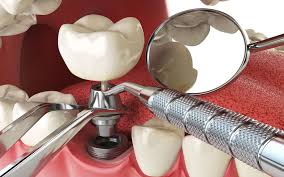
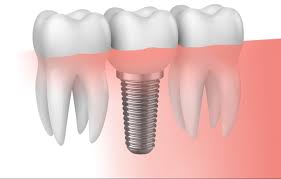
- The foundation. Root canal treatment where needed. Bone grafting and sinus lifts where implants require them. Implants placed and allowed to integrate.
- Establish the bite. Provisional restorations at the new height, worn and assessed.
- Definitive restorations. Crowns, veneers and bridges made to the approved provisional design.
- Protect. A night guard, and the maintenance plan.
Where it goes wrong. Crowns placed before gum disease is controlled — the supporting bone continues to be lost under beautiful new restorations. Restorations made before the bite is established — they fracture, or they are uncomfortable, and the whole case has to be revisited. Implants placed before extractions have healed, or without adequate bone. Definitive work done before the provisional phase has confirmed the design — which means committing to a bite nobody has tested.
Why this shapes your trips. Because the biological stages cannot be compressed. Implants take three to six months to integrate. Grafts take four to nine months. The provisional phase takes weeks to months. A rehabilitation is therefore a sequence across a year or more, and your plan states the trips, the intervals and what happens at each. Any clinic proposing a complete rehabilitation in a single ten-day trip is omitting stages.
6. How this works across an ocean
The practical question, and it deserves a direct answer.
The structure. Typically three to four trips over twelve to eighteen months, with the stages above distributed between them. Between trips you are in Canada, wearing provisionals and healing.
What you need in Canada. A dentist willing to re-cement a provisional if one comes loose. This is the single most important arrangement, and it is the equivalent of the attachment arrangement in our clear aligner guide. Provisional crowns come off occasionally — they are cemented with temporary cement by design, so that they can be removed. Re-cementing one is a five-minute procedure any dentist can do.
The conversation before you travel: « Je vais suivre une réhabilitation dentaire commencée à l’étranger. Je porterai des couronnes provisoires entre les étapes. Accepteriez-vous de les recoller si l’une se descelle ? Je reviendrai avec un plan de traitement détaillé. » Most dentists say yes. Some decline, which is a reasonable professional position — find out before you travel. And routine cleaning, which continues throughout.
What we handle remotely. Photographs and questions at defined intervals. How the provisionals feel — the bite, any discomfort, any joint or muscle symptoms. This is genuinely important information and it shapes the definitive design. We are available in French or English throughout.
Where this model works well. Patients who are organised, and who have a Canadian dentist on side. Patients within reach of a dental appointment. Patients who understand the timeline and have planned their trips around their own life rather than treating each as an emergency.
Where we would be cautious. Patients without local dental support for provisional emergencies. Patients in very remote communities, where a loose provisional becomes a substantial problem. And patients who need this completed quickly — it cannot be, and we would say so. We discuss all of this at the planning stage rather than after you have committed.
7. Why Canadian patients choose Tunisia
| Canada (private) | Tunisia — Aylan Clinic | |
|---|---|---|
| Cost | Very high — the largest absolute difference in dentistry | Up to 60% less |
| Insurance | Annual maximum exhausted immediately, for years | Same limitation, far lower total |
| Sequencing | Frequently dictated by insurance years | Dictated by what your mouth needs |
| Language | English or French | French throughout the country |
| Dentist training | Canadian | Frequently French-trained |
| Laboratory | External | In-house, technician on site |
| Accommodation | Not applicable | Included, full board |
| Companion | Not applicable | Free, accommodated and fed |
Where the sequencing point matters most. This is the argument that matters, and it is not primarily about money. A full mouth rehabilitation in Canada frequently gets staged across three or four benefit years — because the annual insurance maximum will not cover more. Which means the sequence is determined by the calendar rather than by the clinical logic above. Crowns placed this year, implants next year, the bite addressed the year after — and a bite established piecemeal across four years is not a bite that was designed. Here the sequence follows what your mouth needs. That is a clinical argument rather than a financial one, and for this treatment it is the strongest one we have.
Where the in-house laboratory matters. On a case involving twenty or more restorations across two arches, made to a specific bite, matching across materials. The technician is in the building — present at the bite registration, present at the try-in, adjusting immediately. A case of this scale split across postal turnaround times is a different proposition entirely.
Where the language matters on this treatment. At the treatment plan conversation, and it is unlike any other on our site. You are being asked to understand a sequence of four stages, three or four trips, biological intervals you cannot shorten, what happens between them, and what the whole thing will cost — before you commit to a year of your life. That is a lot to hold, and patients consistently tell us they understood it properly, and asked the questions that mattered, in their own language. And your written plan is in French, which you will be referring to for a year.
Dentist training. A substantial proportion of Tunisian dentists and prosthodontists trained in France. Ask where yours qualified. We answer directly.
Part two — planning
8. From first contact to confirmed dates
The online consultation. This is a larger submission than for any other treatment, and it is worth doing properly.
What to send: a recent panoramic X-ray, and DICOM files if you have a CBCT. Photographs: a full smile, teeth together from the front with lips retracted, from each side with teeth together, your upper arch from above, your lower arch from below, a relaxed lip photograph, and a profile. A short video of yourself talking and smiling.
And critically: which teeth have crowns, bridges, root treatments and large fillings, and roughly when they were done. Whether you grind. Whether you have heartburn or reflux, or have been treated for it. Whether you snore or have been told you stop breathing in your sleep. Whether you have jaw joint symptoms — clicking, locking, pain, headaches. Your gum disease history. Your medical history and all medications. And whether you smoke. In French or in English, whichever you prefer.
What you receive. A staged treatment plan, naming: what is done at each stage and why; the number of trips and the interval between each; which teeth are extracted, restored, implanted, and which are left alone; whether grafting or sinus lift is anticipated; how the bite will be established, and the length of the provisional phase; what we need you to arrange in Canada; and the cost of the whole sequence, itemised by stage. Within 48 hours, since these plans take longer to prepare than a single-procedure quote. And where the picture suggests reflux, sleep apnoea or another cause requiring medical assessment first, the plan will say so.
Questions worth asking before you commit.
- « Pourquoi ma bouche s’est-elle détériorée ? » — the question this entire page exists for.
- « Comment allez-vous établir ma nouvelle hauteur de bite, et y aura-t-il une phase provisoire ? »
- « Combien d’étapes, combien de voyages, et quels intervalles ? »
- « Quelles dents gardez-vous, et pourquoi celles-là ? » — a plan that extracts everything is not always a plan.
- « Que dois-je organiser au Canada entre les étapes ? »
- « Le coût indiqué couvre-t-il la séquence complète ? » — the largest source of confusion.
- « Que se passe-t-il si un provisoire se descelle au Canada ? »
- « Où votre praticien a-t-il été formé ? »
9. What to arrange before you start
- Get a CBCT in Canada if you can — it transforms the accuracy of the implant and grafting components.
- Arrange a Canadian dentist for provisional re-cementation and routine cleaning. This is the critical one.
- Address any medical cause first — reflux, sleep apnoea.
- Have a periodontal assessment in Canada if you have not had one recently, and bring the findings.
- Stop smoking, particularly where implants and grafts are involved.
- Disclose bone medications and blood thinners.
- And plan your year. This is a twelve to eighteen month commitment with three or four trips — look at your calendar before you commit rather than after.
Part three — the stages
10. Stage one: stabilisation
Typically seven to ten days.
What happens. Comprehensive assessment — clinical examination, full radiographs, CBCT, periodontal charting, photographs and video, models of your current bite, and jaw joint assessment. The full treatment plan is presented and agreed, with the sequence, the trips and the cost. Periodontal treatment where gum disease is present. Extraction of hopeless teeth, with socket preservation where implants are planned — which frequently prevents grafting later. Root canal treatment on teeth being kept. Decay removed and teeth built up where needed. Immediate provisionals where teeth are extracted in the visible zone — you are not left with gaps.
What you leave with. A stabilised mouth, provisionals where needed, and a written plan for the whole sequence.
The interval. Three to six months for extraction sites and any grafts to heal.
11. Stage two: the foundation
Typically seven to ten days.
What happens. Bone grafting or sinus lift where the CBCT showed it is needed — and our bone grafting and sinus lift guides cover both. Implant placement, where the bone is ready. Where grafting was done at stage one, the implants go in now. Where grafting is needed now, the implants follow at a further stage — and your plan states which applies. Provisionals adjusted as needed.
The interval. Three to six months for implant integration, or four to nine where grafting was performed at this stage.
12. Stage three: the bite
Typically ten to fourteen days, and the most important stage.
What happens. Bite registration and analysis — determining the correct height at which to rebuild, using facial measurements, your remaining teeth, jaw joint assessment and the records taken at stage one. Provisional restorations made at the new bite height, across both arches. This is where the new design is built — the tooth length, the shape, the appearance, and the bite. You see it, wear it, and say what you want changed. Adjustments made during your stay, and the design refined. Implant abutments fitted and provisional restorations placed on them.
What you leave with. A complete provisional rehabilitation — your new bite, your new tooth shape, your new appearance, in temporary materials.
The interval, and what it is for. Six weeks to three months, and this is the stage patients most need to understand. You are living with the new design. Eating with it. Speaking with it. Sleeping with it. Your jaw muscles and joints adapt to the new height — or they do not, and they tell you. You report how it feels, with photographs, at defined intervals. And where something needs adjusting, we advise — and where a Canadian dentist needs to make a small adjustment, we guide them. This phase is what makes a rehabilitation comfortable. Skipping it means committing to a bite nobody tested.
13. Stage four: the definitive restorations
Typically twelve to fifteen days.
What happens. The approved provisional design is recorded precisely — models, scans and photographs, so the definitive restorations reproduce what you have been wearing and approved. Teeth prepared definitively where not already done. Definitive restorations made in the on-site laboratory — crowns, veneers, bridges and implant restorations, all made together so they match. A try-in before finalising, where the appearance and the bite are checked. Fitting, with careful bite adjustment across the whole mouth — which on a full rehabilitation takes time and should not be rushed. An adjustment appointment after a day or two of use. And your night guard, made to the new bite.
What you leave with. The completed rehabilitation, plus a full treatment report naming every restoration, its material and its shade; your implant passport; your night guard; written care guidance in French or English; and guidance for your Canadian dentist.
14. Getting the appearance right
A rehabilitation changes your face, and the design decisions deserve the same attention as in our Hollywood Smile guide.
What changes. Tooth length and how much shows. Shade and uniformity. Lip support. And the height of your lower face, which the bite determines — and which is the change patients notice most.
The provisional phase is your design opportunity. You are wearing the proposed appearance for weeks. Look at it in daylight. Photograph yourself. Ask other people. And say what you want changed before the definitives are made — at that point everything is still adjustable.
The shade advice, again. One step less bright than your instinct. A full mouth of brilliant uniform white on a patient of sixty reads as dentistry. A slightly warmer, slightly varied shade reads as teeth. Assess it in daylight, and look at photographs rather than only the mirror.
Bring old photographs of yourself smiling, from before the wear. They tell us what your own teeth looked like — the shape, the proportions, the slight irregularities. Patients who bring them consistently get a more natural result, and families notice.
Part four — the years that follow
15. Your night guard: not optional here
Where bruxism was part of why your mouth broke down — and it usually was — the night guard is part of the treatment.
Why. The forces that wore your natural teeth will act on your restorations. Ceramic is harder than enamel but it is also more brittle — and a patient who grinds through a full rehabilitation without protection will fracture restorations.
What we provide. A guard made to your new bite, at stage four. And a replacement when it wears — which it will, because it is doing its job.
Wearing it. Every night. Patients who understand why wear it. Patients handed one at the end frequently do not — which is why this appears in the treatment section rather than the aftercare. If you were not offered a night guard as part of a rehabilitation plan, ask why.
16. Maintenance: what protects the investment
Six-monthly, without exception. Check-up, professional cleaning, and radiographs periodically. On a rehabilitation this is not routine dentistry — it is protecting a substantial investment.
What is being checked. The margins of every crown, for decay — which is invisible clinically and the most common late failure. The gum health around every restoration and implant. Bone levels around implants, radiographically. The bite, which can change subtly over years. Your night guard, for wear. And any early fracture or chipping, caught before it becomes a remake.
Cleaning at home. Twice-daily brushing at the gum line with a soft brush — the margins are where failure begins. Daily interdental cleaning, with brushes or floss as appropriate to each site. Superfloss or a water flosser where bridges or implant restorations are involved. And your night guard, cleaned and brought to appointments.

What to tell your hygienist. That you have ceramic restorations and implants. Appropriate instruments exist, and aggressive scaling at a crown margin or an implant surface causes damage. Your treatment report lists what is where, which makes this straightforward.
17. Your Canadian follow-up
During treatment. Provisional re-cementation where needed. Routine cleaning throughout.
After completion. Six-monthly maintenance. And keep your documentation — your full treatment report, your implant passport, and your shade records. On a case of this scale, that documentation is what allows any individual restoration to be remade to match in ten years. Without it, a replacement is guesswork. Photograph it all. Give a copy to your Canadian dentist.
The conversation before you travel. « Je vais suivre une réhabilitation dentaire complète à l’étranger, sur plusieurs étapes. Je porterai des provisoires entre les voyages et je reviendrai avec un plan détaillé et un compte rendu complet. Pourriez-vous assurer le nettoyage habituel, le rescellement d’un provisoire si nécessaire, et le suivi à long terme ? » Most dentists say yes — and having the conversation before you start is what makes the year straightforward.
Canadian insurance. A rehabilitation will exhaust your annual maximum, and frequently for several years. Ask your insurer in writing whether treatment abroad is reimbursable and at what rate, request pre-determination for each stage, and ask how they date a claim — because treatment spanning multiple calendar years may access multiple annual maximums. That last point is worth a specific conversation, since a staged rehabilitation is naturally spread across years. We provide itemised invoicing by stage and by tooth, in French or English, distinguishing restorative from cosmetic work — which matters for what may be claimable.
Part five — practical matters
18. Canadian patients: travelling to Tunisia from your region
Aylan Clinic works with patients from every province and territory in Canada. Wherever you live, the process begins the same way: a free consultation from your radiograph, photographs and video, in French or English. And one thing applies everywhere: arrange a Canadian dentist for provisional re-cementation before you start.
Montreal and the surrounding region. Montreal is our largest Canadian source for Tunisia. Connections from Trudeau to Tunis typically route through Paris, Frankfurt or Istanbul. Patients from Laval, Longueuil and Brossard are all within easy reach of the airport. For a three or four trip pathway, the frequency of Montreal departures makes this considerably more manageable — and many patients time later stages around travel they were making anyway.
Quebec City and across the province. From Quebec City and the Capitale-Nationale region including Lévis, most patients connect through Montreal — as do patients from Trois-Rivières, Sherbrooke, Drummondville and Saint-Jérôme, all within driving distance of Trudeau. Gatineau patients depart from Ottawa or drive to Montreal. From Saguenay, a domestic connection through Montreal is the norm.
On this treatment the francophone advantage matters more than on any other in our dental series. You are committing to a year of your life across four stages, and understanding the plan — the sequence, the intervals, what happens between trips, what you must arrange at home — is what makes it manageable rather than bewildering. And your written plan, which you will refer to for a year, is in French.
Acadia and New Brunswick. We work with patients from Moncton, Fredericton and Saint John. Moncton and the surrounding Acadian communities are served in French throughout. Most connect through Montreal.
Francophone Ontario. Sudbury, Thunder Bay and Sault Ste. Marie all have substantial francophone populations, served in French from first contact onward. Ottawa patients typically connect through Montreal.
Greater Toronto Area and southern Ontario. Toronto patients connect through European hubs, with Paris and Frankfurt the most common routes to Tunis. Across the wider Greater Toronto Area we work with patients from Mississauga, Brampton, Markham, Vaughan, Richmond Hill and Oshawa. Along the lake: Hamilton, Burlington, Oakville, St. Catharines and Niagara Falls. In southwestern Ontario: London, the Waterloo region — Kitchener, Waterloo and Cambridge — plus Guelph, Windsor and Barrie. Kingston patients generally drive to Toronto or Montreal.
Vancouver and British Columbia. Vancouver patients face the longest journey — typically two connections. For a multi-stage rehabilitation, this is the region where planning matters most. We combine stages wherever the biology allows — grafting with extraction, implants with provisionals — to reduce four trips to three where possible. And we are explicit at the outset about how many journeys your case requires, so you can decide whether the pathway is practical for you. Across the Lower Mainland: Surrey, Burnaby and Richmond. From Victoria and Nanaimo, patients cross by ferry or short flight. Kelowna, Abbotsford and Kamloops patients connect through Vancouver or Calgary.
Alberta. Calgary and Edmonton both offer European connections onward to Tunis. Red Deer and Lethbridge patients generally drive to Calgary. Same planning approach as British Columbia.
Manitoba and Saskatchewan. Winnipeg patients connect through Toronto or Montreal. The francophone community of Saint-Boniface is served in French. From Saskatoon and Regina, journeys involve a domestic connection followed by two further flights.
Atlantic Canada. Halifax patients typically route through Montreal or Toronto. From Charlottetown and St. John’s, journeys involve two or three connections.
Northern Canada. We work with patients from Whitehorse in Yukon, and from communities across the Northwest Territories and Nunavut. For northern patients this is the treatment requiring the most honest assessment of all. The number of trips is substantial, and the provisional phase requires access to a dentist if something comes loose. Where that access is genuinely difficult, we say so at the planning stage — and we discuss whether a simplified plan, with fewer stages and a more robust provisional design, would serve better. For some northern patients this works well — the alternative is repeated journeys south anyway, with long waits. For others we would say plainly that the pathway is impractical, and that is a conversation before you commit rather than after.
How we handle the logistics. Whichever city you are travelling from, your coordinator arranges airport transfers at both ends in Tunisia, confirms your hotel before you depart, and builds your schedule around your arrival time.
Five recommendations. Ask why your mouth deteriorated. Get a CBCT in Canada. Arrange your Canadian dentist before you start. Look at your calendar before committing to a twelve to eighteen month pathway. And ask whether the quoted cost covers the complete sequence.
19. What your package includes
- Free consultation in French or English, with a staged plan for the whole sequence and an assessment of why your mouth deteriorated
- Full on-site assessment: clinical examination, full radiographs, CBCT, periodontal charting, jaw joint assessment, photographs, video and study models
- Referral back to Canada for medical assessment where reflux, sleep apnoea or another cause requires it
- Periodontal treatment where needed
- Extractions, with socket preservation where implants are planned
- Root canal treatment where needed
- Bone grafting and sinus lift where planned
- Implant placement, with an implant passport
- Bite registration and analysis using facial measurements and joint assessment
- A complete provisional rehabilitation at the new bite height, worn and assessed before anything definitive
- Adjustments during the provisional phase, with remote support in French or English
- Definitive restorations made together in our on-site laboratory — crowns, veneers, bridges and implant restorations, all matched
- Try-in before finalising
- Careful bite adjustment across the whole mouth, with a follow-up appointment
- A night guard made to your new bite
- Care instruction, including what to tell your hygienist
- Written care guidance in French or English
- A full treatment report naming every restoration, its material and shade, plus your implant passport and CBCT
- Guidance for your Canadian dentist, including provisional re-cementation
- Itemised invoicing by stage and by tooth, distinguishing restorative from cosmetic
- Hotel accommodation, full board, for each trip
- A companion at no extra cost, accommodated and fed in the same room, on every trip
- Airport–clinic–hotel transfers
- A personal coordinator across the whole sequence
- French-speaking care throughout, with English available on request
The clinical team.
- Prosthodontist — treatment planning, bite reconstruction and definitive restorations; frequently French-trained
- Oral surgeon or implantologist — extractions, grafting, sinus lifts and implants
- Periodontist — periodontal treatment and gum contouring
- Endodontist — root canal treatment
- Dental radiologist — CBCT interpretation
- Master ceramist, on site — shade, characterisation and matching across the whole case
- In-house laboratory — provisionals, definitives, try-ins and same-visit adjustments
20. Results by patient profile
Generalised wear from bruxism. A patient in his fifties whose teeth had worn down over two decades, with a shortened lower face and front teeth doing work they were not designed for. The diagnosis identified severe bruxism, and a sleep assessment in Canada — which we recommended — identified mild sleep apnoea he had not known about. Treated first. Then the rehabilitation: bite re-established, provisionals for ten weeks, definitive restorations across both arches, and a night guard. His lower face height was restored, which changed his appearance more than the teeth alone would explain. Addressing the apnoea is what will make it last.

Where we sent a patient for medical assessment. A patient with a wear pattern strongly suggestive of gastric reflux, who had never been diagnosed and had no heartburn. Silent reflux is real, and we recommended medical assessment in Canada before proceeding. It was confirmed and treated. Rebuilding a mouth that is being bathed in acid, without addressing the acid, means rebuilding it again — and that conversation delayed her treatment by four months and will add years to its life.
Multiple failing restorations. A patient with eleven crowns and two bridges, placed over a fifteen-year period and now failing in sequence. A comprehensive plan rather than another individual repair — which is what she had been getting for four years. Three trips over fourteen months. Her comment: she had spent more on patching in four years than she had expected, and none of it had addressed why it kept failing.
Where the bite was the problem. A patient who had lost lower back teeth years earlier, whose front teeth had taken the load and were chipping and mobile. Implants at the back restored the support, and the bite was re-established at the correct height. The front teeth stopped taking forces they were never designed for. This is the collapsed bite pattern, and it is more common than patients realise.
Where we kept more teeth than expected. A patient who arrived having been told in Canada that everything should come out for a full-arch implant solution. Our assessment found six upper and eight lower teeth worth keeping, with periodontal treatment and restoration. A rehabilitation preserving her own teeth rather than replacing them. We will not remove sound or restorable teeth to fit a simpler treatment plan, and this happens often enough to state.
The provisional phase doing its job. A patient whose provisionals, at the planned bite height, produced jaw muscle discomfort in the third week. The height was adjusted — remotely assessed, adjusted by her Canadian dentist under our guidance, and reassessed. The definitive restorations were made to the adjusted height. Had there been no provisional phase, that discomfort would have been built into ceramic.
A patient from Baie-Saint-Paul. A patient who chose Tunisia so the treatment plan could be explained in French. Her comment was about the scale of it. She said she asked what would happen if she needed to delay a stage, what a loose provisional would mean, and whether the intervals were minimums or appointments. All three answers changed how she planned her year — and she would not have thought to ask them through an interpreter.
21. Practical points to know
What to expect. A comprehensive assessment and a written staged plan before anything begins. Three to four trips over twelve to eighteen months. Provisionals worn between stages, in Canada. A provisional phase of six weeks to three months during which you live with the new bite. Definitive restorations made together, with a try-in. A night guard, and six-monthly maintenance thereafter.
Recognised points. A rehabilitation combines established treatments, each with its own considerations, which your clinicians will discuss with you. Across the whole case the main ones are: decay at crown margins over the years — invisible clinically and the most common late failure; fracture or chipping of restorations, most commonly where grinding is not controlled; nerve inflammation in prepared teeth, requiring root canal treatment — more likely where teeth had large existing restorations; implant failure to integrate, uncommon; peri-implantitis over the years; graft resorption where grafting was performed; jaw muscle or joint discomfort during bite adaptation — which is precisely what the provisional phase identifies; loss of a provisional between stages, requiring re-cementation; periodontal breakdown where gum disease is not maintained; and recurrence of wear where the underlying cause was not addressed, which is the one that matters most.
Three things within your control. Addressing the underlying cause — reflux, apnoea, grinding. Wearing your night guard. Six-monthly maintenance, without exception.
Who this suits. Adults with a genuinely failing dentition, able to commit to twelve to eighteen months and three or four trips, with a Canadian dentist on side, and with any medical cause addressed.
Who should think carefully. Patients needing this completed quickly — it cannot be. Patients without local dental support for the provisional phase. Patients in very remote communities.
22. Price: how it is built and how to compare it
Why we quote the whole sequence. Because a rehabilitation is a sequence, and a quote for one stage tells you almost nothing about the total. Your plan sets out every stage, what happens at each, the interval between them, and the cost of the complete pathway — itemised by stage and by tooth, and fixed once you approve it.
What determines your price. Six factors. How many teeth are restored, and with what. How many implants, and whether grafting or sinus lifts are needed. How many extractions and root canal treatments. Whether periodontal treatment is required. The materials, which vary by tooth and position. And the number and length of your trips.
What is included. Everything in the package list above — the comprehensive assessment, the staged plan, periodontal treatment, extractions with socket preservation, root canal treatment, grafting and sinus lifts where planned, implants with a passport, bite registration and analysis, the complete provisional rehabilitation, adjustments and remote support during the provisional phase, all definitive restorations made together with a try-in, bite adjustment and follow-up, the night guard, the full treatment report and CBCT, guidance for your Canadian dentist, itemised invoicing, hotel with full board for each trip, transfers, and your coordinator across the whole sequence. A companion is accommodated and fed at no additional cost, on every trip.
What sits outside it. Flights for each trip, travel insurance, provisional re-cementation in Canada if needed, your six-monthly maintenance, night guard replacement over the years, and eventual replacement of restorations after many years.
How to compare quotes properly. Six checks, and rehabilitation quotes are the least comparable in all of dentistry.
- Does the quote cover the complete sequence, or one stage? By far the largest source of confusion.
- Is there a provisional phase, and is it included? A rehabilitation without one is a rehabilitation in which the bite was guessed.
- Has the cause of the breakdown been diagnosed? A plan that rebuilds without addressing why is a plan to rebuild again.
- How many trips, and are all of them included?
- Is a night guard included?
- Which teeth are being kept, and which removed? Compare two plans on this above all — a plan that extracts substantially more is a different treatment, not a cheaper version of the same one.
Why the lowest quote is rarely the best value. On a rehabilitation, the value is in the planning and the sequencing. The crowns themselves are the least distinctive part. What determines whether this lasts twenty years is the diagnosis, the order of the stages, and the provisional phase that tests the bite before it is committed to ceramic. All three are invisible in a price, and all three are what you are actually buying. And a rehabilitation that fails in eight years, however cheaply done, is the most expensive dentistry there is — because the teeth underneath have been prepared and there is less of them left each time.
Canadian insurance. This will exhaust your annual maximum, for several years. Ask your insurer in writing about treatment abroad, request pre-determination for each stage, and ask specifically how they date a claim — because a staged rehabilitation spanning multiple calendar years may access multiple annual maximums, and that is a conversation worth having properly. Our itemised invoicing by stage and by tooth, distinguishing restorative from cosmetic, is designed to support that.
Payment. A deposit confirms the dates for each stage. The balance for each is settled on site, under terms set out in full when you approve your plan. There are no additional charges once accepted — and where the assessment at any stage reveals something unanticipated, we discuss the revised plan and cost with you before proceeding.
Getting your figure. Send the radiograph and CBCT if you have one, the full photograph set, the video, and the detailed history including grinding, reflux, snoring, jaw symptoms and your restoration history. You will receive a staged plan and quote within 48 hours, in French or English — covering the complete sequence, with the diagnosis, the stages, the intervals and what you need to arrange in Canada. You can also request a free, personalised quote directly.
23. Glossary
| Term | What it means |
|---|---|
| Full mouth rehabilitation | Rebuilding all or most teeth in both arches as a single plan |
| Vertical dimension | The height of your lower face, determined by how the teeth meet |
| Collapsed bite | Reduced bite height from wear or posterior tooth loss |
| Provisional phase | Living with the new bite in temporary restorations before committing |
| Bite registration | Recording how the jaws relate at the planned new height |
| Bruxism | Grinding and clenching; the most common cause of generalised wear |
| Acid erosion | Tooth loss from acid, dietary or gastric |
| Silent reflux | Gastric reflux producing erosion without heartburn |
| Socket preservation | Graft at extraction; prevents later grafting |
| Implant passport | Record of implant brand, model and position |
| Staged sequencing | The order in which treatment is performed; determines whether it lasts |
24. How Canadians search for this
- “Full mouth rehabilitation Tunisia cost” — the most common search. Ask whether the quote covers the complete sequence.
- “Réhabilitation dentaire complète Tunisie” — how most Quebec patients search, and the reason this page exists in both languages.
- “Full mouth reconstruction” — the same treatment, and the term used interchangeably.
- “My teeth are worn down” — generalised wear, and the diagnosis matters more than the restoration.
- “Teeth keep breaking” — the signal that you need a plan rather than another repair.
- “Full mouth dental implants vs saving my teeth” — we will not remove sound or restorable teeth to fit a simpler plan.
- “Bite collapse” — reduced lower face height from wear or back tooth loss, and it is what a rehabilitation re-establishes.
- “Acid erosion teeth” — dietary, gastric or both. Where reflux is the cause, treat it first or the new restorations erode too.
- “Do I need a full mouth reconstruction” — if repairs are postponing problems rather than solving them, probably yes.
- “How long does full mouth rehabilitation take” — twelve to eighteen months across three or four trips. It cannot be compressed.
- “Full mouth rehabilitation in one trip” — it omits stages, including the provisional phase that tests the bite.
- “Provisional restorations” — the stage where the new bite is tested before it is committed to ceramic. Insist on it.
- “French speaking dentist abroad” — Tunisia’s distinguishing feature.
In summary
Full mouth rehabilitation at Aylan Clinic Tunisia begins with a diagnosis of why your mouth deteriorated — and, where the cause is medical, a recommendation to address it in Canada first. It follows a staged sequence in which gum disease precedes restorations, extractions precede implants, and the bite is established and tested in provisionals before anything is committed to ceramic. Three to four trips over twelve to eighteen months, with the whole sequence planned and priced before you begin — and the sequence determined by what your mouth needs rather than by annual insurance maximums. And it takes place in a French-speaking country, which on a treatment of this scale matters more than on any other: you are committing to a year of your life, and the plan you will refer to throughout is in your own language. With accommodation, full board and a companion at no extra cost on every trip, for up to 60% less than Canadian private prices.
Five things worth holding onto.
- Ask why your mouth deteriorated. Grinding, reflux, sleep apnoea — and a plan that rebuilds without addressing the cause is a plan to rebuild again.
- Insist on a provisional phase. Living with the new bite before committing it to ceramic is what makes a rehabilitation comfortable — and it is the stage most easily left out.
- Compare plans on how many teeth each keeps. We will not remove sound or restorable teeth to fit a simpler treatment, and a plan that extracts substantially more is a different treatment rather than a cheaper one.
- Arrange a Canadian dentist before you start. Provisional re-cementation and routine cleaning — one conversation, and it makes the year straightforward.
- Check that the quote covers the complete sequence. By far the largest source of confusion when comparing, and a quote for stage one tells you almost nothing.
Send your radiograph, photographs and history and you will have a staged plan within 48 hours — in French or in English.
For how the treatment itself is delivered — the stay, the clinical steps and the care that follows — see our procedure page on full mouth dental restoration in Tunisia. Explore the wider dental care in Tunisia hub, compare figures on plastic surgery prices in Tunisia, or request a free, personalised quote.
Related guides
- Dental Implants in Tunisia
- Zirconia Crowns in Tunisia
- All-on-4 Dental Implants in Tunisia
- All-on-6 Dental Implants in Tunisia
- Dental Bone Grafting in Tunisia
- Removable Dentures in Tunisia
Everything about Full Mouth Rehabilitation in Tunisia
Diagnosis, staged sequencing, the provisional phase, pricing and the full patient journey — every detailed answer in one place.